Haiti: Security Implications for Religious and Humanitarian Organizations.
Haiti Security Brief – Threat assessment for religious and humanitarian organizations
Demographics:
Haiti is one of the most densely populated islands in the Caribbean. Among its dense population of 11.90 million, 95% of the country is of French Western African descent, and 5% a mix of various other ethnic groups. Religiously speaking, the country is made up of 80% Catholics, 16% Protestantism, 1% Atheism, and 3% a mix of other faiths. The widely spoken languages consist of Haitian Creole and French.
Political and economic Instability:
Since 2021, Haiti’s centralized government has essentially collapsed following the assassination of President Jovenel Moise, who was assassinated due to long-developing political turmoil and instability caused by his governance. His death resulted in a vacuum of power that has developed since then, resulting in the current security environment of the country. Following the assassination of President Moise, Prime Minister Ariel Henry assumed governance over Haiti from 2021-2024; however, he led without a functioning parliament or elections. Following Prime Minister Henry’s term, a transitional presidential council served as the collective head of state from 2024-2026, but also failed to organize elections or gain any centralized authority. And most recently, after the council’s dissolution in February of 2026, the newest interim government has consolidated power under Prime Minister Aliz Didier Fils-Amie.
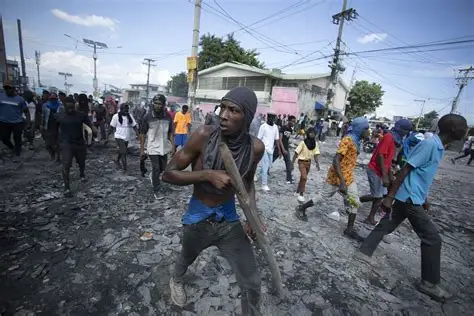
Such instability has resulted in a weakening of physical government control in the region; in fact, it is estimated that the government and its police and military organizations control 10% in the capital region, and in the broader rural areas, control 50-60%. The rest of Haiti is run by gangs that control critical infrastructure such as fuel depots, airports, seaports, highways, and government facilities. This has resulted in a lawless environment, leaving governance up to the major gangs, namely: G9 Family and Allies, G-Pep, Grand Griff, and Viv Ansanm. Gangs are able to consolidate power by enforcing “gang economies”. In other words, gangs across Port-Au-Prince exploit critical infrastructure primarily by taxing or tolling imports that pass through their territory. Other such methods they use are drug and firearm trafficking in order to ensure hegemony in the region via terrorism and narcotics sales.
Thanks to governance led by criminal organizations, Haiti has seen a spike in humanitarian crises, violent crimes, and political persecution. Specifically, homicides and sexual violence have seen large increases post the governmental collapse of 2021. On average, 4-5,000 people a year are murdered, 1,494 people were kidnapped in the year of 2024, and over 5,000 cases of sexual assault are reported a year in Haiti. Additionally, there have been several instances of large-scale massacres since 2023, often resulting in upwards of 50 individuals targeted in organized gang killings. Additionally, it is estimated that 1.4 million individuals have been displaced from their native regions due to gang violence.
Security Environment:
As of 2026, the security apparatus of Haiti is run mainly by the Armed Forces of Haiti, the Haitian National Police, and the Kenyan-led UN Security force. The Haitian National Police provides security as the premier law enforcement agency in the country and acts as the national first responder force. Duties of the HNP would include first response, patrol, executive protection, and securing disputed territories. In terms of Security and gaining governmental clearance, religious and humanitarian organizations would primarily need support and authorization from the HNP before conducting missions. The armed forces of Haiti are also another agency, but act as a supplemental force to the police and also as a support force against gangs. As of June 2024, the Kenya-led UN Security force is the third major paramilitary force present in the country, which acts mainly as a counter-gang and critical infrastructure protection force supplementary to the HNP and armed forces.
Security Implications
Such an unstable environment has extreme implications for humanitarian missions that occur thereof. Firstly, such organizations must act only within the legal perimeters set forth by the UN-recognized government of Haiti. This will result in organizations needing to obtain clearance by governmental authorities in secure regions before conducting missions in high-risk areas. Supply routes, aid packages, and ministry operations may be barred from occurring in high-stakes provinces, meaning the organization must stay fluid and have backup plans when conducting missions. Back-up routes, change of flight plans, and obtaining physical security for employees are all realities that must be considered in this environment. In this instance, a unified command center should be set in place in the country to quickly make decisions as events and threats unfold.
As explained, many airports, seaports, and highways are under direct control of gangs; therefore, it is advised to ensure that assets, equipment, aid, resources, and vehicles are equipped with insurance in case of theft by criminal organizations. Furthermore, personnel must be equipped with training and self-defense resources in the case of an emergency. Country security managers must ensure the safety and training of all personnel to mitigate risk and ensure the survival of personnel. They may do so by working with national and international security forces do so. Such organizations include the Kenya-led United Nations peace corps, Haitian National Police, and the Armed Forces of Haiti.
Projections for 2026
Given the topics discussed in this briefing, I believe that the projections for the remainder of 2026 are that Haiti will largely remain the same without any major changes to the governmental system that it currently operates. Since 2021, the government has failed to ensure its national security due to a weak government system, and no political indicators show that said system will change in the near future. Nor are there any indicators of major changes in gang-controlled areas. Despite international security forces and other such international support, including humanitarian NGO’s, Haiti simply requires a consolidated government strong enough to quell the criminal syndicates in Port-Au-Prince. As of right now, religious and humanitarian organizations must continue to ensure co-operation with local law enforcement for security-related purposes, as well as keeping compliance with legal policies and procedures while conducting missions in the country. A sophisticated command network must be prioritized as operations continue in Haiti, as well as providing the insurance of company personnel, equipment, vehicles, and property,